

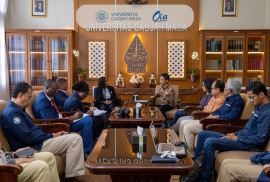
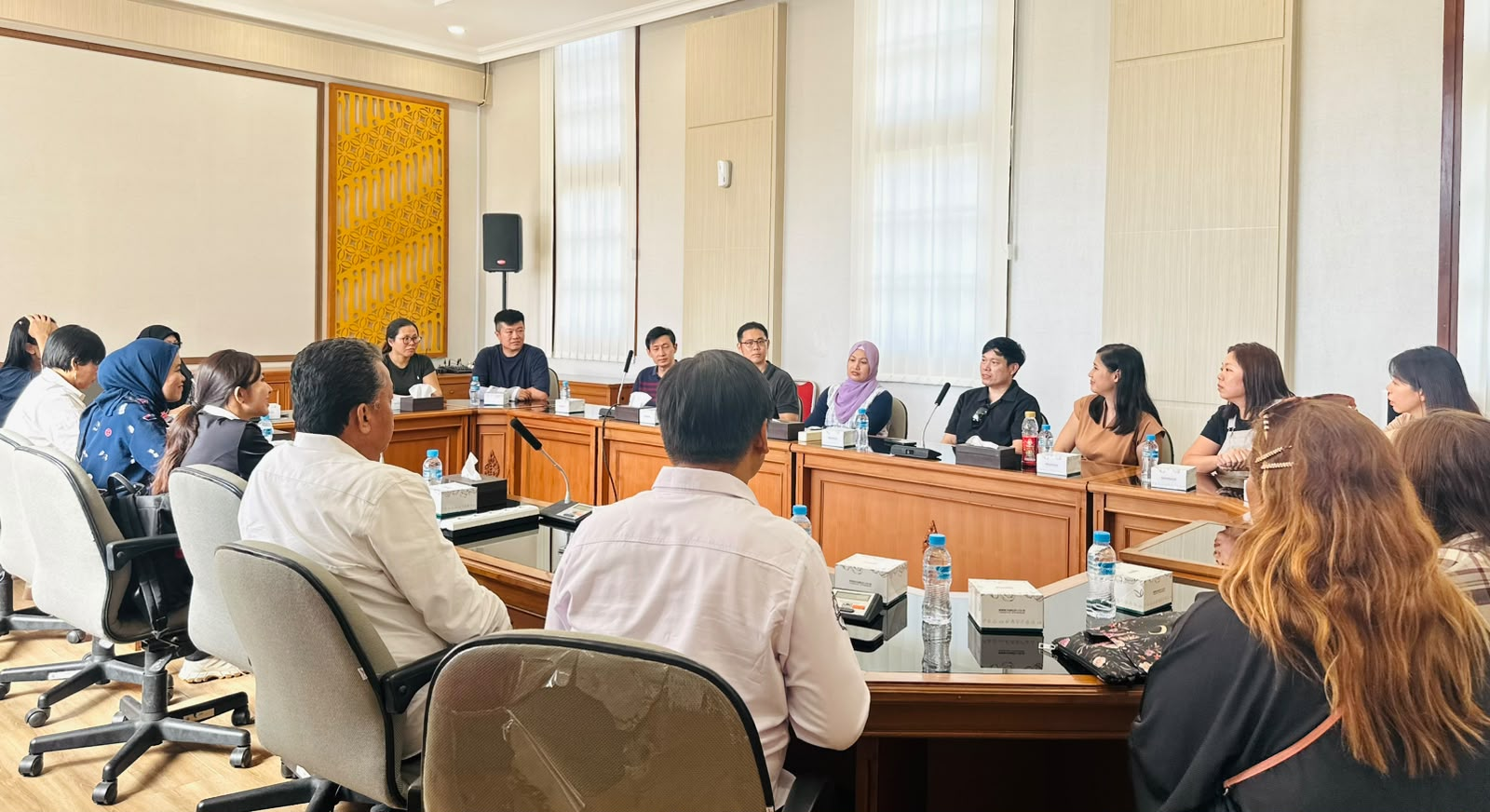
Universitas Gadjah Mada (UGM) and Aalto University, Finland, explored opportunities to strengthen their institutional partnership during a meeting at UGM on November 3, 2026. The discussion outlined several strategic initiatives, including initiating the institutional framework for collaboration, exploring a double-degree master’s program with the Faculty of Engineering and the Faculty of Mathematics and Natural Sciences, sharing information on Aalto University grants for short courses, and exploring the potential use of the EQUITY program from Indonesian Ministry of Higher Education, Science and Technology to support student mobility and joint research. These initiatives aim to strengthen academic and research collaboration, particularly in science, technology, and engineering, while expanding international opportunities for students and academics.
Aalto University is a unique collaborative hub in Finland, a country consistently ranked among the happiest in the world for its safety, cleanliness, equality, and balanced way of life. Each year, Aalto’s students complete approximately 250 doctoral degrees, 2,200 master’s degrees, 1,700 bachelor’s degrees, and 300 MBA and Executive MBA certificates. The university has around 16,000 degree students, with international students making up 9% of bachelor’s, 25% of master’s, and 40% of doctoral students.
During the meeting, Prof. Pekka Marttinen, Vice Dean for Education and Associate Professor of Machine Learning in the School of Science at Aalto University, introduced six academic schools that could serve as pathways for UGM students: the School of Arts, Design and Architecture; School of Electrical Engineering; School of Engineering; School of Science; School of Chemical Engineering; and School of Business.

Representing UGM, Tyas Ikhsan Hikmawan, S.Si., M.S., Ph.D., Head of UGM’s Office of International Affairs (OIA), highlighted the university’s comprehensive academic offerings across four academic clusters. He emphasized the importance of beginning the partnership through curriculum and course recognition.
“The first step is to exchange our syllabi and recognize the courses offered at both universities. We already have several one- and two-year programs that could serve as a reference for the potential collaboration between UGM and Alto,” he explained. A Double Degree model at the Master’s level is seen by both universities as the low-hanging fruit that could be further examined at the Program Study level.
Beyond curriculum development and educational collaboration, the meeting also explored opportunities for joint research, in line with the Indonesian government’s efforts to strengthen research support. Aalto University introduced its International Summer Research Program 2027, a 12-week program offering students full-time supervised research experience in Finland, alongside international networking, cultural activities, and salary and travel benefits.

Both universities also discussed the potential to establish research consortia, starting with science and engineering fields and expanding into other disciplines. Aalto University highlighted its strengths in materials science, metallurgy, process engineering, and artificial intelligence research through the ELLIS Institute Finland, part of the pan-European ELLIS network. Meanwhile, UGM offers complementary research expertise, particularly in green energy, sustainable buildings, and infrastructure at the Faculty of Engineering, as well as algorithms, electrical instrumentation, and computer networks at the Faculty of Mathematics and Natural Sciences (FMIPA UGM). These shared interests provide opportunities to develop interdisciplinary research and strengthen international academic collaboration.
As part of the visit, Aalto University representatives also participated in guest lectures at the Faculty of Mathematics and Natural Sciences UGM. Prof. Pekka Marttinen and Dr. Heli Lehtivuori shared their expertise through sessions on Recent Advances in Teaching AI Agents New Skills and Knowledge and Primetime Learning in Chemical Engineering. The lectures provided an opportunity for UGM students and academics to engage directly with international researchers, exchange perspectives, and explore developments in emerging fields of science and technology.

Through continued communication and coordination, UGM and Aalto University aim to advance discussions toward formalizing the partnership while working closely with the relevant faculties and academic units to refine the program structure. Given the large number of students in the Faculty of Mathematics and Natural Sciences and the Faculty of Engineering, interest is expected to center on urban planning, biomedical engineering, chemical engineering, and computer science, particularly within international undergraduate programs.













Recent Comments