• About UGM
  • IT Center
  • Webmail
Universitas Gadjah Mada Office of International Affairs
Universitas Gadjah Mada
  • Home
  • About US
    • OIA Profile
    • OIA Organizational Structure
    • About UGM
    • OIA Behind The Scene
  • Global Networks
    • International Collaboration
    • Existing Networks
    • Collaborate With Us
  • Admission
  • Opportunities
    • Incoming
      • Double Degree
      • Scholarship
      • Summer Course
      • UGM-INCiTE Summer School 2026
    • Outgoing
      • Procedures
      • Scholarship and International Exposure
      • Fellowship
      • Research & Publication
      • Award
  • NEWS
  • Contact Us
  • Beranda
  • #SDGs17
  • #SDGs17
Arsip:

#SDGs17

UGM Advances Education, Research, and Innovation through Partnerships with China’s Leading Universities

HighlightsNews ReleaseSlide Monday, 19 October 2026

Universitas Gadjah Mada (UGM) strengthened its international partnerships with leading Chinese universities through a series of visits to Tsinghua University and Peking University in Beijing, China, on October 12 and 13, 2026. The visits aimed to deepen existing collaborations and explore opportunities for further academic and research cooperation between the institutions.

The UGM delegation consisted of Rector, Prof. dr. Ova Emilia, M.Med.Ed., Sp.OG(K)., Ph.D.; the Vice Rector for Research, Business Development, and Partnerships, Dr. Danang Sri Hadmoko, S.Si., M.Sc.; the Vice Dean for Research, Community Service, Collaboration, and Alumni of the Faculty of Pharmacy, Prof. Dr.rer.nat. Nanang Fakhrudin, M.Si., Apt.; and the Vice Dean for Cooperation, Alumni, and Community Services of the Faculty of Medicine, Public Health, and Nursing, Dr. dr. Sudadi, SpAn-TI.,Subsp.N.An.(K)., Subsp.An.R(K).

The visit to Tsinghua University began with a courtesy meeting, during which the UGM delegation was warmly welcomed by university representatives led by the Vice President of Tsinghua University, Prof. Wang Hongwei. Following the meeting, the delegation toured several facilities, including laboratories and the Pharmaceutical Technology Center, to learn more about the university’s research and academic facilities.

Professor Wang also emphasized the importance of strengthening cooperation with Indonesian universities, given Indonesia’s significance as a major country in Southeast Asia. Tsinghua’s representative office in Bali reflects the University’s strong commitment to expanding higher education collaboration across Southeast Asia, particularly with Indonesia.

The visit also marked a decade of cooperation between UGM and Tsinghua University, dating back to 2016, when UGM hosted 20 Tsinghua students and senior executives through the Cross-Cultural Understanding Summer Program. The two universities subsequently formalised their institutional partnership by signing a Memorandum of Understanding (MoU) in 2022.

The following day, the UGM delegation visited Peking University. The Vice President Prof. Dr. Fang Fang, who also serves as a member of the University’s Party Committee Standing Committee, received Rector Ova and delegation in the central hall of Linhuxuan. He introduced UGM’s delegation with Peking University’s educational programs and international partnerships. Prof. Fang Fang also noted that Peking University values collaboration with Indonesian universities and research institutions, and that the two sides have already established a strong foundation for exchanges in medicine and public health. 

In addition to a courtesy meeting to discuss institutional relations, the delegation visited the Peking University Health Science Center, providing an opportunity to explore areas of shared interest in health sciences and medical education.

One existing collaboration between the two institutions involves the School of Public Health at Peking University and UGM’s Faculty of Medicine, Public Health, and Nursing. The cooperation agreement, which runs from 2025 until 2030, provides a foundation for continued collaboration between the two academic units.

“UGM values its growing partnerships with both Peking University and Tsinghua University,” Prof. Ova remarked. “We hope to deepen collaboration in education and research, expand opportunities for faculty and student exchange, and develop joint initiatives that respond to shared priorities in Indonesia, China, and the wider region.”

To conclude the visit, the UGM delegation met with representatives of the Embassy of the Republic of Indonesia in Beijing and was welcomed by Parulian George Andreas Silalahi, the Deputy Chief of Mission. The meeting provided an opportunity to strengthen institutional ties and engage with Indonesia’s diplomatic representatives in China.

Mr. Silalahi remarked that the Embassy welcomes UGM’s efforts to strengthen academic partnerships with leading universities in China. “These collaborations can create new opportunities for joint research and academic exchange, while contributing to stronger ties between Indonesia and China,” he added.

Through these visits, UGM seeks to maintain strong relationships with its Chinese university partners while exploring opportunities to expand academic and research collaboration. Continued engagement with international institutions remains an important part of UGM’s efforts to advance global partnerships and create opportunities for knowledge exchange.
Russian Ambassador Visits UGM to Open New Paths in Academic Collaboration and Research Partnerships

HighlightsNewsNews ReleaseRecent NewsResearchSlide Wednesday, 7 October 2026

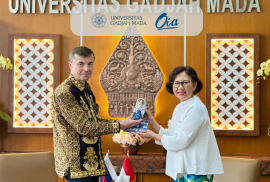
Universitas Gadjah Mada (UGM) continues to expand its international network by strengthening partnerships with international partners, including the Russian Federation. One such effort was realized through a courtesy visit to the UGM campus on Wednesday, October 7, 2026, by the Ambassador of the Russian Federation to the Republic of Indonesia, Sergei Tolchenov, who was accompanied by the Director of the Russian House in Jakarta, Nikita Shilikov, and their delegation. The visit marks a step toward deepening bilateral ties in higher education, research, and innovation.


The meeting focused on exploring potential partnerships in several areas, including the proposed establishment of Russian Studies at UGM’s Faculty of Cultural Sciences, the Russian Government Scholarship for Indonesian citizens, the Rosatom Scholarship, and opportunities for collaboration in tropical-polar research. The discussion also covered academic development, student and academic mobility, and research collaboration between UGM and institutions in Russia.

UGM Rector Prof. dr. Ova Emilia, M.Med.Ed., Sp.OG(K), Ph.D., emphasized that the meeting represents an opportunity to translate existing institutional relations into more tangible academic and research activities.


“Through this visit by the Russian Ambassador, we hope to build on the relationship that UGM and our partners in Russia have developed over the years and expand it into broader collaboration, not only in education and research, but also in fields such as agriculture, engineering, culture, and tropical-polar research, as well as technological innovation, capacity building, and other initiatives that can contribute to addressing shared global challenges and strengthening the relationship between Indonesia and Russia.”

Meanwhile, Sergei Tolchenov, Ambassador of the Russian Federation to the Republic of Indonesia, highlighted the importance of strengthening educational and academic ties between Russia and Indonesia, particularly through opportunities that directly involve students, academics, and researchers.


“The Indonesian government’s current focus is largely on the need for skilled personnel in science, technology, engineering, and mathematics (STEM), a need that is becoming increasingly important. By strengthening academic and research cooperation, we can provide students and young researchers with greater opportunities to develop the knowledge and skills needed to meet these emerging needs.”

Collaborative ties between UGM and various Russian institutions continue to grow through active partnerships with entities such as MGIMO University, ITMO University, Saint Petersburg State Marine Technical University, St. Petersburg State University, and JSC Positive Technologies. A range of programs has been implemented, including student mobility (semester exchanges, competitions, and the IISMA program through 2024), academic exchanges, and joint research and publication initiatives. Memorandum of Understanding and student exchange agreements with these partners serve as the foundation for long-term academic cooperation. Looking ahead, UGM is also in the process of establishing new partnerships with the Institute of Asian and African Studies, Lomonosov Moscow State University, and RUDN University.


The discussion also explores potential cooperation in language studies, nuclear technology applications for medicine,agriculture and clean energy and a double-degree program on nuclear engineering Besides aiming to address important issues such as climate change and cryosphere dynamics, the joint programs on nuclear technology also reflect the effort from UGM to support the Indonesian Government in supplying scientists and skillful human resources to establish a more sustainable environment through cleaner energy. Additionally, these high-impact initiatives are expected to strengthen UGM’s international reputation, expand global academic partnerships, and support SDGs 13, 14, 15, and 17.

UGM Students Bring Indonesian Youth Perspectives to ASEAN Through AUN-SAN VOX 2026

HighlightsNewsRecent NewsSlide Wednesday, 9 September 2026

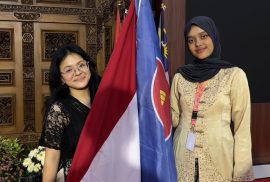
Two Universitas Gadjah Mada (UGM) students brought Indonesian youth perspectives to a regional platform through their participation as student representatives at the 2nd AUN-SAN VOX (Voice, Opportunity and eXchange) Meeting 2026, held at Universitas Airlangga, Surabaya, from 2–5 September 2026.

Organized by the AUN-SAN Secretariat together with Universiti Utara Malaysia as the Chair of AUN-SAN, this forum forms part of the 7th AUN-SAN Meeting 2026 and brought together student representatives from seven ASEAN countries, including Indonesia, Malaysia, Brunei Darussalam, Singapore, Thailand, the Philippines, and Vietnam. The theme for this year’s forum is “Future Skills, Global Minds”, aiming to discuss emerging challenges and opportunities facing young people and higher education in the region.

Representing UGM were Eugenia Novera Kwang, a Law student from the 2023 cohort, and Ajeng Zahia Aini, a Public Policy and Management student from the 2025 cohort. Both students are active members of AIESEC, a global youth-led organization that provides young people with opportunities to develop leadership, engage in cross-cultural collaboration, and contribute to global issues.

For Eugenia, the experience offered more than an opportunity to participate in an international forum. It provided a space to engage in cultural exchange, build meaningful connections, and learn from peers across ASEAN.

“VOX was a very memorable experience for me because I had the opportunity to meet friends from different ASEAN countries and learn more about their cultures and things I had never known before. Beyond the cultural exchange, I also gained many new connections, which made this experience very valuable for me both culturally and in terms of networking,” Eugenia said.

Meanwhile, for Ajeng, participating in AUN-SAN VOX marked her first international conference and provided an opportunity to represent Indonesia while engaging in regional discussions.

“This was my first experience attending an international conference, and it has been an unforgettable experience. Through AUN-SAN VOX, I was able to connect with students from different countries, particularly across ASEAN. I also had the opportunity to represent Indonesia and bring issues from Indonesia into the ASEAN-level discussion,” Ajeng said.

As a member of the ASEAN University Network (AUN), UGM continues to strengthen its engagement with higher education institutions across Southeast Asia. AUN serves as a regional platform for academic collaboration, student mobility, and cooperation in higher education development. Meanwhile, the AUN Student Affairs Network (AUN-SAN) focuses specifically on student development and welfare through the exchange of good practices, experiences, and ideas among universities in the region. Through AUN-SAN VOX, students are given a direct platform to participate in regional dialogue and contribute their perspectives to issues affecting the future of ASEAN youth.

Throughout the four-day meeting, the UGM delegates participated in a series of activities, including Issue Mapping Sessions, Breakout Room Discussions, the Idea Pitch of Campus Solutions Exchange, and the Policy Resolution Lab. These sessions enabled participants to identify common challenges, exchange campus-based solutions, and collaboratively formulate student resolutions while also addressing future-oriented issues, including artificial intelligence literacy, employability in an increasingly automated world, cross-cultural competencies, and sustainability. 

UGM’s participation also resulted in a notable achievement. The team involving Eugenia Novera Kwang received the “Best Collaborative Team” recognition, acknowledging the team’s collaboration and active contribution throughout the AUN-SAN VOX 2026 program. The recognition reflects the importance of teamwork, adaptability, and intercultural communication in collaborative environments involving participants from diverse cultural and institutional backgrounds.

For UGM, participation in AUN-SAN VOX 2026 represents an important part of its internationalization efforts by creating opportunities for students to engage directly with regional peers, exchange knowledge across cultures, and contribute Indonesian perspectives to conversations shaping the future of higher education and youth development in Southeast Asia.

The networks established during the meeting are expected to provide opportunities for future cross-border student collaboration, knowledge exchange, and joint initiatives among universities in the ASEAN region. The insights and good practices gained from the forum may also contribute to the development of student affairs initiatives at UGM, particularly in areas such as student mobility, digitalization of student services, employability, and future skills development.

UGM and Jardine Foundation Strengthen Partnership on Postgraduate Scholarship

HighlightsNewsSlide Thursday, 13 August 2026

Head of Jardine Foundation, Mrs. Retno Marsudi, visited the Universitas Gadjah Mada (UGM) alongside Jardine Foundation representatives on 12 August 2026. They were welcomed by UGM Rector Prof. Ova Emilia, accompanied by the Vice Rector for Research, Business Development, and Partnerships alongside Office of International Affairs representatives.

The visit primarily discusses the potential collaboration between Universitas Gadjah Mada and the Jardine Foundation for the postgraduate scholarship program. For years, UGM and the Jardine Foundation have successfully held the Jardine Foundation Scholarship Program with notable alumni managed to work in top tier company and continue postgraduate study at world-top universities.

Retno Marsudi, the former Minister for Foreign Affairs of Indonesia, emphasized the commitment from Jardine to support the development of education in Indonesia.

“Hopefully, the scholarship will help the awardees to expand their opportunities in the future,” she said. “Going forwards, the focus will not only be on the university, but also educating the educators to increase their capacity.”

Both the Jardine Foundation and UGM have aligned visions towards the Indonesia education sector since 2014, believing education should be given equally and inclusively. This vision has led to the initiation of the Jardine Scholarship for Postgraduate scheme, extending the scholarship impact beyond undergraduate study. This postgraduate scholarship will be provided for master and doctoral students across Indonesia, considering the urgent need to develop human capital in the education sector in the remote regions of Indonesia. 

Alongside the postgraduate scheme, the meeting also discussed potential collaboration in community development, leadership, and entrepreneurship to deliver larger impact for Indonesia. This collaboration will involve several multinational companies as partners, aligning the academic, extracurricular, and career development of UGM-Jardine awardees. The meeting was then followed up by an informal discussion between Mrs. Retno Marsudi and current awardees of the UGM-Jardine scholarship, a photo session with the UGM rector, and a campus tour around UGM. 

Through UGM-Jardine scholarship, both institutions hoped for the increased quality of Indonesia education, strengthened by integrated academic and career option. 

Ambassador of Qatar Reaffirms Commitment to Strengthening Educational Partnerships During Visit to UGM

HighlightsNewsSlide Tuesday, 4 August 2026

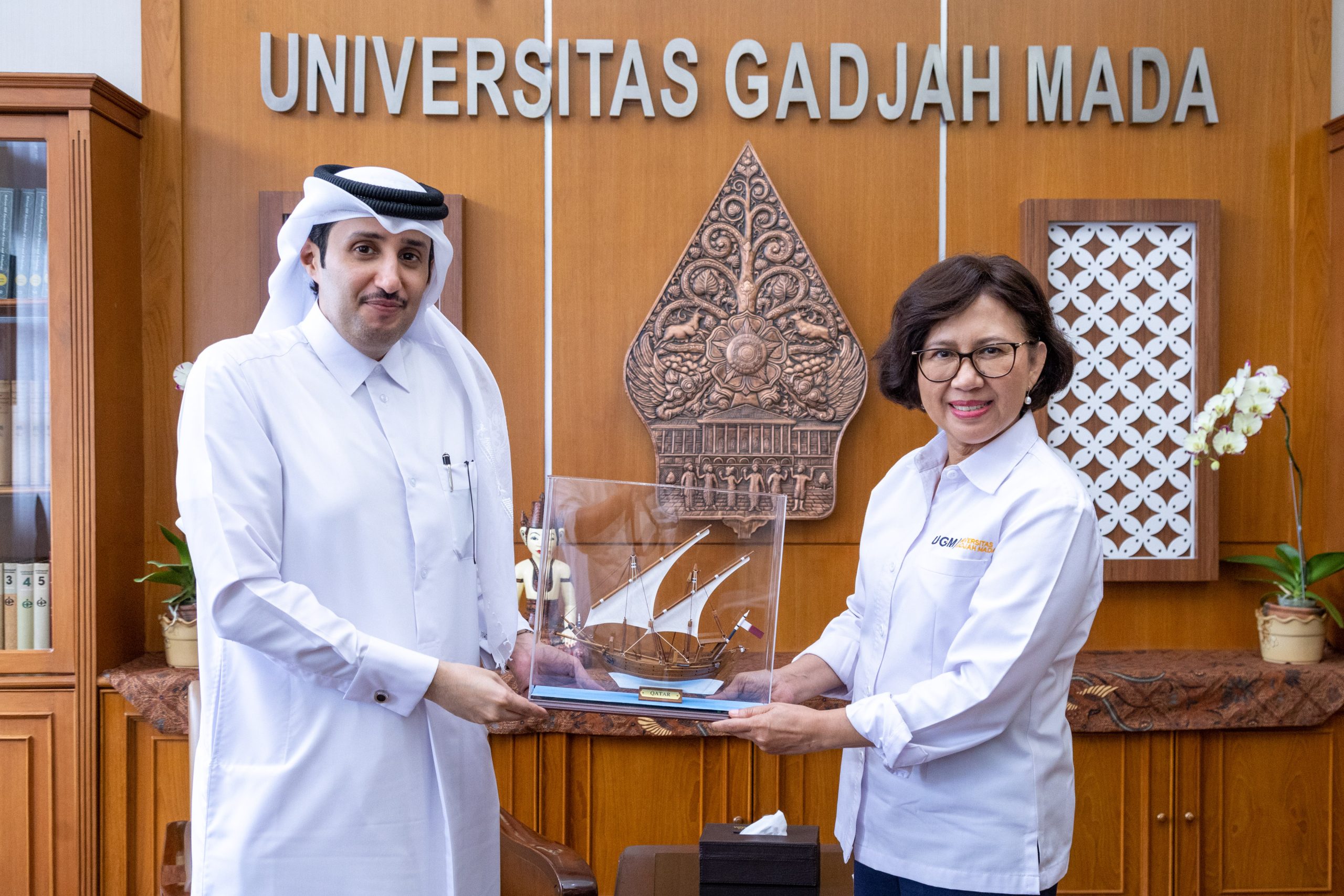
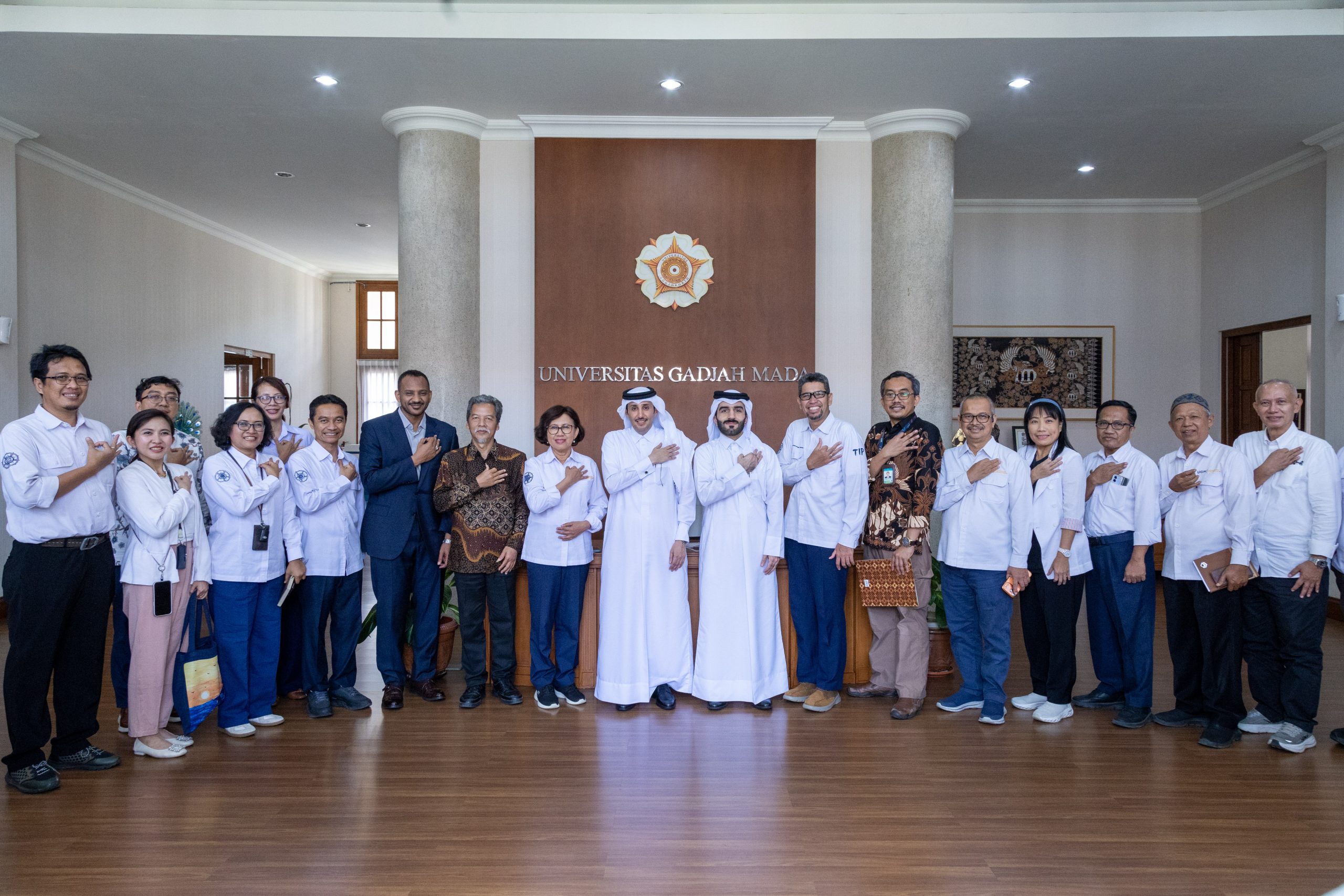
The Rector of Universitas Gadjah Mada (UGM), Prof. Ova Emilia, welcomed the Ambassador of the State of Qatar to Indonesia, H.E. Dr. Sultan bin Mubarak Saad Al-Dosari, during a courtesy visit on Monday, August 3, 2026, at the Rector’s Meeting Room. The Rector was accompanied by the Vice Rector for Research, Business Development, and Partnerships, along with representatives from several faculties and directorates across the university.

The visit served as an important opportunity to discuss strengthening partnerships between UGM and various institutions in Qatar, particularly in the areas of higher education, research, innovation, and human resource development. The meeting also explored opportunities to expand UGM’s collaboration with leading universities in Qatar and to identify potential funding schemes that support the implementation of the university’s three pillars of higher education or Tridharma Perguruan Tinggi: education, research, and community service.

UGM was the first university visited by H.E. Dr. Sultan bin Mubarak Saad Al-Dosari following his appointment as the Ambassador of the State of Qatar to the Republic of Indonesia. Although he assumed office in late 2025, he officially presented his credentials to the President of the Republic of Indonesia on June 10, 2026.

During the meeting, the Rector highlighted several ongoing collaborations between UGM and its partners in Qatar, including the university’s strategic partnership in artificial intelligence (AI) with Indosat Ooredoo Hutchison and NVIDIA, supported by the Ministry of Communication and Digital Affairs. This collaboration has led to the establishment of the NVAITC Joint Centre, which is scheduled to be officially launched on August 13, 2026, at Gelanggang Inovasi dan Kreativitas (GIK) UGM.

UGM also invited potential collaboration with Qatari partners in developing the Institute for Future Life UGM in Indonesia’s future capital, Nusantara (IKN), particularly in research, innovation, and technology development that support sustainable development.

The Ambassador welcomed UGM’s proposals to strengthen academic cooperation. “We are ready to facilitate stronger collaboration with universities and institutions in Qatar, including Qatar University and Hamad Hospital,” said Ambassador Al-Dosari.

UGM has previously established partnerships with several institutions in Qatar, including Qatar University, Hamad bin Khalifa University and the University of Doha for Science and Technology.

The relationship between UGM and Qatar has also continued to grow through various collaborative initiatives. These include a courtesy meeting with the former Ambassador of the State of Qatar to Indonesia (2020–2024), H.E. Fawziya Edrees Salman Al-Sulaiti, in May 2023; UGM’s participation in the 1st Indonesian Education Expo in Doha, Qatar, on May 11–12, 2024; and the visit of Dr. Awni Al-Otoom, Dean of the College of Engineering Technology at the University of Doha for Science and Technology, to UGM’s Vocational College on July 9, 2024.

Through this visit, UGM and the Embassy of the State of Qatar hope to open more mutually beneficial opportunities for collaboration, ranging from joint research and academic mobility to strategic partnerships with universities, hospitals, and industry partners in Qatar. The strengthened relationship is expected to further enhance cooperation between Indonesia and Qatar in higher education, innovation, and the advancement of science and technology.

UGM Students Won Most Impact Award in 2026 U21 RISE Awards

HighlightsNewsSlide Wednesday, 22 July 2026

A collaborative project led by students from the Faculty of Engineering and Vocational College Universitas Gadjah Mada named GELORA recently won the Most Impact Award for the 2026 Universitas 21 (U21) Real Impact on Society and Environment (RISE) Awards.

Led by Amir Fren Afrizal, Rahma Alya Nabila Damayanti, Fa’iq Al-Baihaqi, Muhammad Lathif Adani and Muhammad Zulfa Azizi, the GELORA project created an eco-friendly, portable household incinerator which uses a closed combustion system and activated carbon filtration to burn domestic waste safely without emitting harmful pollutants.

“We are honoured that GELORA has been named winner of the ‘Most Impact’ Award in the U21 RISE competition,” said Amir. “This project is a practical response to Indonesia’s growing domestic waste challenge. Our goal is clear: accessible, sustainable waste management within reach of every household.”

As winners, the students will be awarded US $2,000 in seed funding through the 2026 U21 RISE Awards to fund their project. “This recognition, and the accompanying seed funding, will help us expand the impact of our project, refine the product for durability and safety, and explore partnerships for community-scale production,” Amir added.

Aside from UGM, another three outstanding student-led projects from across the U21 network have been selected as winners in 2026 U21 RISE Awards: Most Potential Award for Potastic from University of Birmingham, Most Collaborative Award for La Raiz from UC Chile, and People’s Choice for Innovation for Craftscape HK from the University of Hong Kong. These awards intend to recognise innovative ideas that are already making a difference within their university, for people in their communities and wider society.

Selected from an impressive range of projects, the winning teams demonstrated the power of student innovation to drive meaningful change on a local and global level. Three awards were selected by an international panel of judges from across the network, while the People’s Choice for Innovation award, introduced this year, attracted more than 6,000 public votes.

Since launching in 2019, the U21 RISE Awards have showcased the ingenuity of students developing practical solutions to some of society’s most pressing global challenges. From improving healthcare access and advancing environmental sustainability to strengthening communities through social innovation, the awards help accelerate the scale and impact of student-led projects, supporting student innovation and nurturing the next generation of sustainability leaders.  

U21 or Universitas 21 is a diverse, global network that brings together world-leading, research-intensive universities across six continents. As of 2026, 31 universities including UGM have joined U21 as part of an effort to nurture well-informed, highly educated, globally responsive citizens and leaders of the future.

Exploring Innovation in Action: INCiTE Summer School Participants Visit Local Industries Across Yogyakarta

HighlightsNewsSlide Tuesday, 21 July 2026

Going further into the second week of INCiTE (Intercultural Competence, Innovation, and Entrepreneurship) Summer School 2026, the participants had the opportunity to expose themselves to Indonesia’s diverse entrepreneurial ecosystem through a series of industry visits across Yogyakarta.

Spread across 10-17 July 2026, the participants visited six curated destinations representing different sectors of industry: from biotechnology and creative manufacturing to sustainable agriculture, circular economy initiatives, and traditional craftsmanship. It allows the participants to observe how local enterprises address contemporary challenges through innovation while preserving Indonesia’s cultural heritage and promoting sustainable development.

One of the highlights was a visit to Bambu Nusa Verde (BNV), a biotechnology company specializing in the micropropagation of bamboo species. Participants learned how scientific research and biotechnology are applied to develop sustainable bamboo cultivation for industrial and ornamental purposes. The visit demonstrated how innovation in plant biotechnology can contribute to environmental conservation while creating new economic opportunities through renewable natural resources.

The program also introduced participants to Dowa Bag Factory, one of Yogyakarta’s internationally recognized fashion brands. Starting as a small home-based enterprise, Dowa has grown into a successful global business while preserving traditional hand-knitting and crocheting techniques. Through discussions with the company’s team, participants explored how creativity, craftsmanship, and artisan empowerment have become key drivers of sustainable business growth in Indonesia’s creative economy.

At Bakpia Mutiara Factory, participants discovered how one of Yogyakarta’s most iconic culinary products has evolved from a traditional family recipe into a modern food enterprise. Beyond observing the production process, students experienced making bakpia themselves, gaining practical insights into product development, quality control, and the importance of preserving local culinary heritage while adapting to contemporary markets.

Sustainability became the central theme during visit to Jejamuran Agrotourism. At Jejamuran, participants explored an integrated farm-to-table business model where fresh mushrooms are cultivated, processed, and served as innovative culinary products. The visit highlighted how sustainable agriculture can create value through environmentally responsible food production and agritourism. 

The final day of the industry visit brought participants to Nangsib Keramik Kasongan and Jogja Life Cycle. Located within the renowned Kasongan pottery village, Nagsib Keramik Kasongan brought participants to observe every stage of ceramic production, from shaping clay and firing to finishing handcrafted products. They also took part in hands-on pottery workshops guided by local artisans. The experience illustrated how traditional craftsmanship continues to thrive through innovation, entrepreneurship, and the preservation of cultural heritage that has supported local livelihoods for generations.

Meanwhile, Jogja Life Cycle introduced participants to community-based initiatives promoting circular economy practices through waste reduction, recycling, composting, and environmental education. Interactive activities encouraged participants to reflect on responsible consumption and the role of communities in advancing environmental sustainability.

More than introducing participants to successful local enterprises, the industry visits encouraged them to examine how entrepreneurship can generate social, economic, and environmental impact. By engaging directly with entrepreneurs, artisans, researchers, and community leaders, participants gained valuable perspectives on innovation rooted in local wisdom and sustainable practices.

The knowledge and inspiration gained from these experiences will serve as an important foundation for the participants as they work in multicultural teams to develop innovative project ideas for the INCiTE Project Fair. Through this combination of academic learning and experiential fieldwork, the INCiTE Summer School continues to equip future global leaders with the entrepreneurial mindset, intercultural competence, and collaborative skills needed to address increasingly complex global challenges.

UGM Welcomes Global Participants for the INCiTE Summer School 2026

HighlightsNewsSlide Friday, 10 July 2026

Universitas Gadjah Mada (UGM) officially launched the INCiTE Summer School Program 2026, welcoming around 150 students and staff from seven institutions around the world along with UGM students as the participant during the opening ceremony held on Thursday, July 9, 2026 at the Mezzanine Student Centre of Gelanggang Inovasi dan Kreativitas (GIK) UGM.

INCiTE (Intercultural Competency, Innovation, and Entrepreneurship) is an intensive international mobility program first launched in 2019 to connect students across Asia-Pacific and Europe. In 2026, UGM had the honor to host the INCiTE Summer School Program in collaboration with several leading global institutions: University of Edinburgh, University of Sydney, University of Toronto, Nanyang Technological University, National University of Management Cambodia, and CUBEL UK.

INCiTE 2026 opening ceremony was officiated by Prof. Dr. Puji Astuti, Director of Partnership and Global Relations UGM. During the opening remarks, she highlighted the importance of global collaboration and entrepreneurial mindsets in addressing modern global challenges, while encouraging participants to make the most of their experiences in this program.

Before the opening ceremony, participants joined the INCiTE Quest, an interactive campus exploration activity designed to familiarize them with UGM while introducing Indonesia’s history, culture, and the unique character of Yogyakarta. The activity also encouraged teamwork, communication, and problem-solving through engaging challenges across the campus. 

The opening day continued with two Local Insight sessions delivered by UGM academics, introducing participants to Indonesia’s modern history, culture, politics, and society, followed by an Indonesian language session organized by INCULS to equip them with essential cultural and linguistic knowledge before beginning the academic program. The day concluded with a Welcome Dinner at Westlake Resto & Resort, where participants, university representatives, and the organizing committee had the opportunity to network, strengthen international connections, and foster friendships in a relaxed and welcoming atmosphere.

Running until 24 July 2026, the program provides participants with a comprehensive learning experience designed to strengthen their entrepreneurial mindset and intercultural competence through a series of lectures delivered by INCiTE partner universities and local insight sessions led by UGM faculty members. Beyond the classroom, participants will also take part in industry visits across the Yogyakarta region, where they will gain first-hand exposure to entrepreneurial ecosystems, sustainable business practices, and local creative industries. These experiential learning activities enable participants to connect academic knowledge with real-world applications while gaining a deeper understanding of innovation, entrepreneurship, and Indonesia’s dynamic business landscape.

At the end of the program, participants will engage in multicultural, collaborative work in which they will need to develop and present innovative project ideas inspired by knowledge and experiences gained throughout the program.

UGM Strengthens Academic and Alumni Networks Through Visit to the University of Oxford

HighlightsNews Friday, 10 July 2026

The Rector of Universitas Gadjah Mada (UGM) Prof. dr. Ova Emilia, M.Med.Ed.,Sp.OG(K)., Ph.D accompanied by the Director of Education and Learning Prof. dr. Gandes Retno Rahayu, M.Med.Ed., Ph.D, recently visited the University of Oxford, United Kingdom, on June 24, 2026. The visit formed part of UGM’s official mission to the UK from June 21 to 29, 2026, aimed at strengthening relationships and expanding networks with UGM’s international partners and alumni in the country.

During the visit to Oxford, the UGM delegation met with the Co-Director of Oxford Global Health as well as seven alumni from UGM’s Faculty of Medicine, Public Health, and Nursing (FKKMK) who are currently pursuing their doctoral studies at the University of Oxford. The meeting provided an opportunity to exchange ideas on ongoing research developments and identify new avenues for collaboration between the two institutions.

Several potential areas of cooperation were discussed, particularly in the fields of health sciences and life sciences. The discussions included the continuation of collaboration between FKKMK UGM and Oxford in areas such as artificial intelligence (AI), nutrition, community care, non-communicable diseases (NCDs), and the utilization of big data to support healthcare services and research. In addition, both institutions explored opportunities for collaboration between Oxford’s Department of Biology and UGM’s Faculty of Biology, including the possibility of joint research initiatives and academic exchanges.

The delegation also discussed opportunities to expand academic mobility through postgraduate study pathways and research fellow placements at Oxford for UGM students and researchers. Such initiatives are expected to provide broader opportunities for UGM’s academic community to engage with the global research ecosystem while strengthening the university’s research and educational capacities.

The visit also served as an important occasion to reconnect with UGM alumni currently pursuing their studies in the United Kingdom. The presence of UGM graduates at one of the world’s leading universities reflects the growing contribution of UGM alumni within the international academic community and opens new possibilities for collaboration between alumni and their alma mater in the years ahead.

Beyond Oxford, the Rector and Director of Education and Teaching’s visit to the United Kingdom also included a courtesy visit to the Embassy of the Republic of Indonesia in London, where the delegation was welcomed by the Ambassador of Indonesia to the United Kingdom, Ireland, and the International Maritime Organization (IMO). The delegation also met with members of KAGAMA UK to strengthen engagement with UGM’s alumni network abroad.

The visit concluded with a trip to the University of Dundee in Scotland, where the Rector of UGM was awarded an Honorary Doctorate during the university’s graduation ceremony. Altogether, the UK mission reaffirmed UGM’s commitment to expanding its international engagement, strengthening global partnerships in education and research, and increasing the university’s contribution to the advancement of knowledge on the international stage.

A Rare Tandem Visit Brings the Dutch and German Ambassadors Together at UGM

HighlightsNewsSlide Tuesday, 26 May 2026

YOGYAKARTA – In what is widely regarded as a rare and symbolically significant occasion in the diplomatic calendar, Universitas Gadjah Mada (UGM) welcomed two ambassadors concurrently on Wednesday, May 20, 2026. H.E. Marc Gerritsen, Ambassador of the Kingdom of the Netherlands to Indonesia, Timor-Leste, and ASEAN, and H.E. Ralf Beste, Ambassador of the Federal Republic of Germany to Indonesia, were present in a tandem courtesy visit to UGM that underscored the deep and enduring educational ties between Indonesia and two of Europe’s foremost academic powerhouses.

The delegation was received by UGM Rector Prof. dr. Ova Emilia, M.Med.Ed., Sp.OG(K), Ph.D., accompanied by senior university leadership, including Vice Rector for Research, Business Development and Partnerships Dr. Danang Sri Hadmoko; Director of Partnerships and Global Relations Prof. Puji Astuti; and the Head of UGM’s Office of International Affairs (OIA), Tyas Ikhsan Hikmawan, Ph.D. Representatives from the Faculty of Biology, Faculty of Geography, Faculty of Social and Political Sciences, Faculty of Medicine, Public Health, and Nursing, and Faculty of Pharmacy were also present, reflecting the breadth and depth of UGM’s engagement with both countries.

Ambassador Gerritsen spoke warmly of UGM’s standing as an institution where science, arts, and innovation grow together, serving both the purpose of academic excellence and greater societal impact. He pointed to the LPDP scholarship framework as a vehicle for channeling Indonesian talent toward leading Dutch institutions in fields like water management, food science, and horticulture, and expressed interest in deepening ties through frameworks already in motion. This includes the Leiden-UGM Twin Laboratory at the Laboratorium Penelitian dan Pengujian Terpadu (LPPT), the INUCoST consortium, and the UGM–University of Groningen Hub for Future Human Welfare. Over the last five years, UGM and its 19 Dutch partner institutions have produced over 670 joint publications and maintained a robust reciprocal flow of students and researchers. That academic relationship is further anchored by a community of UGM and Indonesian alumni who studied in the Netherlands and have since returned to assume renowned roles in academia, government, and industry.


One of the most tangible symbols of that Dutch-Indonesian partnership is the Leiden-UGM Twin Laboratory, housed at UGM’s LPPT. First initiated in 2017 as a joint facility between UGM and Leiden University, the Twin-Lab has been revitalized since early 2026 and is now operating as an active research center focused on zebrafish (Danio rerio) as a biological model organism. The colony has been successfully established with stable egg production, and key instruments have been relocated to the facility, including a robotic injector and several advanced microscopes that now enable procedures such as embryo microinjection and real-time developmental observation. Two Leiden-UGM double-degree PhD students are currently conducting their research there: one working on fish models for mycobacterial infections and another on peptide screening for anticancer compounds using zebrafish. Ambassador Gerritsen, who toured the facility following the courtesy meeting, expressed admiration for the progress made and for the ingenuity with which the Twin-Lab has kept itself operational and scientifically productive even without large-scale institutional funding.

On the other hand, Ambassador Beste, who took up his post in Jakarta in October 2025 after serving as Director General for Culture and Society in the German Foreign Ministry, brought equal conviction to the table. He spoke of the DAAD, Germany’s academic exchange powerhouse, as a lifelong engine of people-to-people ties and invoked the legacy of B.J. Habibie to illustrate how a German education can leave a mark on a nation. UGM’s partnership with Germany spans 28 institutions and nearly 450 joint publications in the last five years, anchored by landmark initiatives like the Get-In CICERO geosciences laboratory built jointly with RWTH Aachen, and a growing portfolio of DAAD-supported programs including visiting professorships, leadership training, and consortium research grants. He also spoke at length about the generosity underpinning Germany’s higher education philosophy. The long tradition of near-tuition-free university education, heavy public investment in research, and the deep belief that access to knowledge is a public good rather than a commercial transaction. But he was also equally candid about the pressures reshaping that landscape: the rapid transformation of industries such as semiconductors, artificial intelligence, and advanced manufacturing is fundamentally altering what universities must teach and how they must teach it. Staying relevant, he argued, demands that institutions on both sides of the partnership remain nimble, continuously updating curricula and forging ties between the classroom and the cutting edge of industry.

Among the most forward-looking discussions of the afternoon was the potential for collaboration through UGM’s Gelanggang Inovasi dan Kreativitas (GIK), the university’s new Center for Art and Creativity. GIK Director, Alfatika Aunuriella Dini, presented the facility as a convergence point for industry and creative talent, with an art gallery, innovation ecosystem, and openness to international student internships and artist residencies. Both ambassadors responded with genuine interest and were openly engaged by the possibilities, especially after a brief tour at GIK as a concluding agenda of the day.

Rector Ova Emilia set the tone for the day early, noting that there remain many opportunities to expand research collaboration, particularly through small-scale joint funding as a first step toward bigger ambitions. For UGM’s Office of International Affairs, the visit was a reminder that the university’s deepening European ties are becoming something more extensive and considerably more productive. (Adnan/OIA)

123…10

Recent Posts

  • UGM and Anhui Agricultural University Explore Potential Partnership in Sustainable Agriculture, Research, and Academic Collaboration
  • Vienna University of Economics and Business (WU) – Nenewed Ernst Mach Grant by ASEA-UNINET
  • UGM and Coventry University Strengthen Ties and Explore Expanded Academic Partnerships
  • [Thailand] Naresuan University – 2027 NU Cultural Exchange Program
  • [South Korea] Jeonbuk National University (JBNU) – Exchange Program Spring Semester 2027

Recent Comments

  • Janiece Gerke on [Korea] – Master of Arts in Asian Women’s Studies, Ewha Womans University
  • Renna Latchaw on [Malaysia] Universiti Utara Malaysia – Virtual Students Exchange Program for Fall 2020
  • Meruyert on [Japan] Kumamoto University – Student Exchange Program for Spring 2021
  • Mulatu Agajie on [South Korea] Seoul National University – SNU President Fellowship for Fall 2021
  • Zahira on [South Korea] Seoul National University – Student Exchange Program for Fall 2021
Universitas Gadjah Mada
Office Of International Affairs
Universitas Gadjah Mada
Bulaksumur F12-13-, Yogyakarta, 55281–
Incoming Students
Scholarship info
General Student Mobility Affairs
Incoming Lecturer and Researcher

+62 (274) 6492599

+62 (274) 565223

COOPERATION

  • Homeland Cooperation
  • Alumni
  • International Affairs

ABOUT UGM

  • Rector’s Words
  • History
  • Vision & Mission Statement
  • Pimpinan Universitas
  • Manajement

VISIT UGM

  • Campus Map
  • Agenda

REGISTRATION

  • Undergraduate
  • Graduate
  • Diploma
  • Profession
  • International

© 2024 Office of International Affairs

KEBIJAKAN PRIVASI/PRIVACY POLICY